
Apparently, this is an issue for some Christians. The Catholic Church has definitively declared that, yes, God and Allah are the same, and Muslims and Christians worship the same God.
The plan of salvation also includes those who acknowledge the Creator, in the first place amongst whom are the Muslims; these profess to hold the faith of Abraham, and together with us they adore the one, merciful God, mankind’s judge on the last day.
Catechism of the Catholic Church, 841. Cf. Vatican II, Lumen Gentium, 16
For some Christians, this is an issue because Muslims deny that Jesus is the Son of God, whereas Christians claim that Jesus is the Eternal Son of God, the Second Person of the Holy Trinity. Muslims deny that God has, or could have, a Son. So if Christians worship a Trinity of Persons in God, and indeed worship Jesus as God, and Muslims deny any plurality of God, then they seem to be talking about two different things.

I think the best way to approach this is to distinguish between reference and description. (A more complete treatment can be found at “This Everyone Calls God“.) Names can have the same referent, that is, the same thing they point to, but point to it under different descriptions, or lists of attributes. There are some classic examples in philosophy. You can talk about Socrates as being the teacher of Plato or the husband of Xantippe. “Teacher of Plato” and “husband of Xanthippe” are two different descriptions, but they both refer to the same person who goes by the name, Socrates. Or the evening star, called Hesperus, and Phosphorus, the Morningstar. To the ancient Greeks, they thought these were two different stars, but it was later discovered that they were, in fact, the planet Venus. So there are two different descriptions, one as appearing before sunrise, and the other as appearing soon after sunset. But the two descriptions have one and the same referent.

From this perspective, the names, “Holy Trinity,” or “the Father of Jesus,” or “the God of Abraham, Isaac and Jacob,” and “Allah” can all have the same referent, i.e., the same thing that is referred to — the same creator of the universe — but they have different descriptions, or lists of attributes. These terms have the same Divine Being as referent, but under different descriptions. And obviously “the God of Abraham, Isaac, and Jacob,” that is “Yahweh,” the God of the Jews is not (or is not understood or described as) a Trinity of Persons (even if the reality is that He is). But Jesus explicitly says that his Father is the God of Abraham, Isaac and Jacob.
Jesus Himself confirms that a person can worship the true God, but under a different description. When Jesus is talking to the Samaritan woman at the well, he says
You people (Samaritans) worship what you do not understand; we worship what we understand, because salvation is from the Jews.
John 4:22
Thus, Jesus indicates that people can worship the One True God, without understanding Him completely, and indeed, without understanding that Jesus Himself is that One True God.
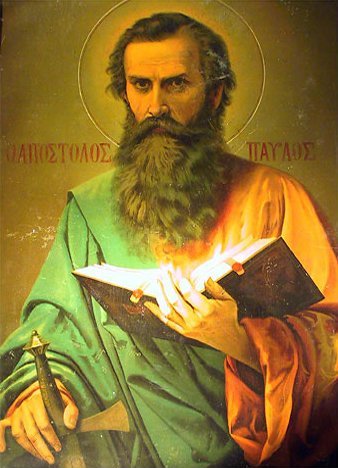
Saint Paul implies the same thing when he is preaching to the Greeks in Athens at the Areopagus. He points out that they have a temple to an unknown God, and then he informs them that this unknown God is in fact, Jesus who was raised from the dead.
What therefore you unknowingly worship, I proclaim to you.
Acts 17:23
Even Saint Paul acknowledges that the Greeks were worshiping God before they knew who God was, or that God became incarnate in Jesus. So Scripture itself indicates that it’s possible to refer to the same one God, but worship him or depict him differently and under a different description or set of attributes.
This seems to be an issue for some Christians because they seem to think that if you say that Muslims, for instance, worship the same God that Christians do, then somehow you’re equating Islam with Christianity or the Catholic faith. But these claims are not saying the same thing. There are two different questions here. Who Muslims worship is one thing, and it just seems to be the case that they’re worshiping the One True God. Whether they are worshipping him correctly or as he has revealed himself, or whether they understand all truth about Him? — obviously not. From the perspective of the Catholic faith, they miss out on a lot. But that doesn’t mean they’re referring to a different thing.
And so simply to say that the One True God is being referred to by both Muslims and Christians (and Jews or other monotheists) does not mean that the different religions are equal, or there’s no difference between different religions.
It is yet another, further question whether Muslims or other non-believers can be saved and can go to heaven.
 Thomistic Philosophy Page
Thank you for this article,
God Bless & Happy New year
LikeLike
You’re welcome. I’m glad you found it helpful. Please share with anyone who could benefit from the information. May God bless you and grant you a Happy New Year also.
LikeLike
There are so many flaws in this information, it is almost unbelievable. “NO” we do not worship the same God by virtue of Islam’s ‘god’ promoting (Mohammad’s words & deeds in the Hadith) violation of every single commandment. You cannot equate oone ‘god’ who demands submission and total obedience, with God who is all-loving, extends free will and allows us to ‘earn salvation’ through obedience to the 10 Commandments.
The errors in Vat 2 were immeasurable, only surpassed by the heretics who were directing the detailing of the changes that have destroyed the church from within. Better wake up, stop relying on “coles notes” or other tainted readings and start doing the research!
LikeLike
Thank you for your comment. I acknowledge that God and Allah are not in all respects identical, but that both names refer to the same One God who created everything other than himself, though they do so under different descriptions. You have only reiterated that Muslims describe or understand God differently than Christians, but not that they must be referring to an entirely different entity. In fact, if Muslims say untrue things about God, e.g., that Jesus in not the Son of God, they must be referring to the same God about whom it is true to say that Jesus is the Only Begotten Son of God. If Allah were a different being than God, it may or may not be true to say that he has no son. But if they are wrong to say Allah has no son since Jesus is His Son, then God and Allah must refer to the same Being, though under different descriptions.
LikeLike
Your statement “….In fact, if Muslims say untrue things about God, e.g., that Jesus in not the Son of God, they must be referring to the same God …” is a classic example of illogic. Using the same name for an object, while erroneously listing what you require its traits to be, is to describe something totally different: IE: “A cow has 2 legs, weighs between 3 and 8 lbs, and produces a hard-shelled egg almost daily from which its offspring will come if it lays on it for a certain period of days”….
To say that “Well, you used the word ‘COW’ as the noun, therefore you are describing the exact same animal that Webster’s dictionary does under its definition” is ludicrous, and an example of corrupted thinking.
However this is the illogical mentality that Islam has been using as its justification “crutch” for nearly 1400 years now… contradict, change definitions and claim to be the opposite.
LikeLike
To use your example, “Cows produces milk” is false only if I am talking about your “cow” (actually a chicken). The statement is true if I am referring to a different animal (an actual cow). “Jesus is not the son of Allah/God” is false only if “Allah/God” refers to the One True God. It is true if “Allah/God” refers to another being or no being at all.
LikeLike
Jehovah GOD and Allah are not the same
jehovah is the true God that has a son who happens to be Jesus Christ, while Allah is a deity which can never begot a child. In Jesus Christ we become heir to the throne of God but , in Allah is slavery so how can Christian and Muslim so can be the same God.
LikeLike
Thank you for your comment, but unfortunately, it has a number of mistakes.
First, Jehovah is not a word in any actual ancient language. It is a mistake in 17th transliteration of two Hebrew names for God. It takes the consonants YHWH (Latinized to JHVH) for Yahweh (I AM) and inserts the vowels for Adonai (Lord). The 17th century translators who made this mistake did not understand that a pious Jew would not pronounce the sacred name YHWH, and indicated that they should substitute instead Adonai by writing the vowels for the latter over the consonants of the former name.
Second, Christians and Muslims refer to the same God because the referent of each religion’s names have the same essential attributes of being the sole Creator of everything other than Himself, being the God of Abraham, Isaac, Jacob (whose description also does not include being a Trinity of Persons), being the Divine Judge of the Living and the Dead, etc. Obviously, Islam describes the One, True God differently than Christians do, but they have to be referring to the same God if their description of Him are wrong (see prior comments). If Jews and Christians worship, and so refer to the same God (and Jesus says they do) and if Greek Pagans and Christians worship the same God (and Saint Paul says they do in his speech in the Areopagus in Acts of the Apostles), then Muslims and Christians do, as well.
LikeLike
Query:
P1. The Trinity is an necessary part of the divine nature.
P2. The whole nature of a being is needed to create a proper referent.
P3. Muslims deny the Trinity.
C. Therefore, Muslims do not share the same the same referent as Trinitarians.
What is incorrect in this logic? Thank you.
LikeLike
P2 is false. In general, we do not have to know the whole nature of anything (which we almost never know) to refer to it, nor even an essential attribute, but just some unique attribute (which may be an accident (relation – e.g., husband of Xanthippe; God of Abraham, Isaac, and Jacob) or performative quality (winner of the race; creator of everything other than itself). Moreover, we do not come anywhere close to knowing the whole nature of God. Aquinas shows that we don’t know God’s nature at all (or only analogously (He is more unlike than like)), but only know that essential attributions about Him are true. E.g., we don’t understand how God is His own Existence (esse), but just that this is and must be true of God. Also, P1 might be true of God per se (in Himself) but not quoad nos (with respect to us), or non-trinitarians such as Jews, Samaritans, and Athenians would not have successfully referred to God (as Scripture attests they do). Finally, unless Muslims are referring to the One, True God, they would not be mistaken to deny He is a Trinity of Persons.
LikeLike