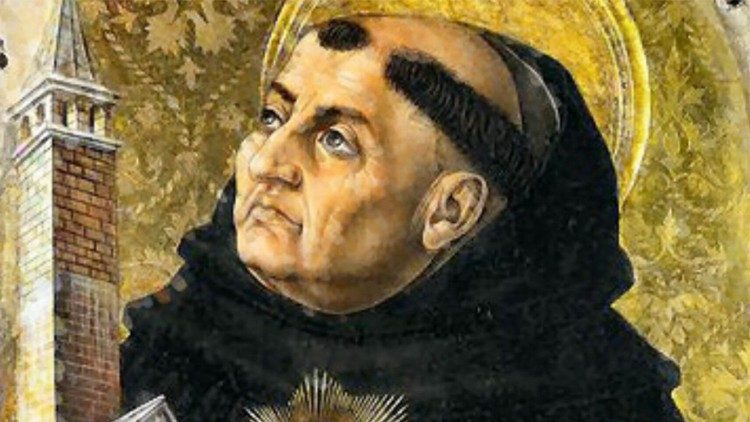
I found and shared on Facebook an article from the Vatican News Service “Pope Francis: Thomas Aquinas’ thought more relevant than ever“ featuring remarks Pope Francis made about the enduring value of Saint Thomas and his doctrinal legacy on the occasion of a workshop organized by the Pontifical Academy of Social Sciences commemorating the 750th anniversary of the death of Saint Thomas Aquinas.
Today, Pope Francis asserts, it is essential to consider anew what Thomas calls our “natural inclination to know the truth about God, and to live in society,” in order to “shape social thought and policies in ways that promote, rather than hinder, the authentic human development of individuals and peoples.”
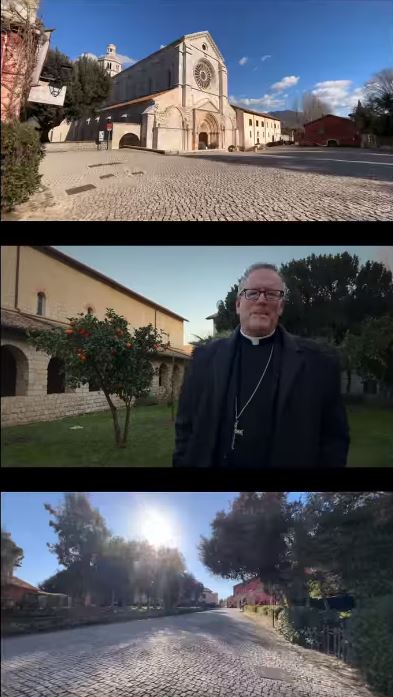
Bishop Robert Baron also posted a video about his participation in this workshop where he delivered a talk, intriguingly titled “Ipsum Esse in Relation to Catholic Social Thought.” Other papers focused on Saint Thomas’s teaching on natural law and the human person in relation to contemporary concerns. Some examples,
- Prof. Hans Joas – Organic Social Ethics and the Sacredness of the Person. Thomas Aquinas as a Challenge for Sociological Theory
- Prof. Pierpaolo Donati – Thomas Aquinas and the Ontology of Relationships: Actualization of a Theological and SocioCultural Matrix
- Prof. Jean Porter – Natural Law, Equality, and Social Order in Aquinas’ Moral and Legal Thought
- Fr. Albino Barrera – A Thomistic Ontology of Collective Economic Responsibility: Holding the Invisible Hand to Account
- Prof. Greg Reichberg – Thomistic Resources for Contemporary Ethics of War
- Prof. Gyula Klima – Intelligence: Human vs. Artificial
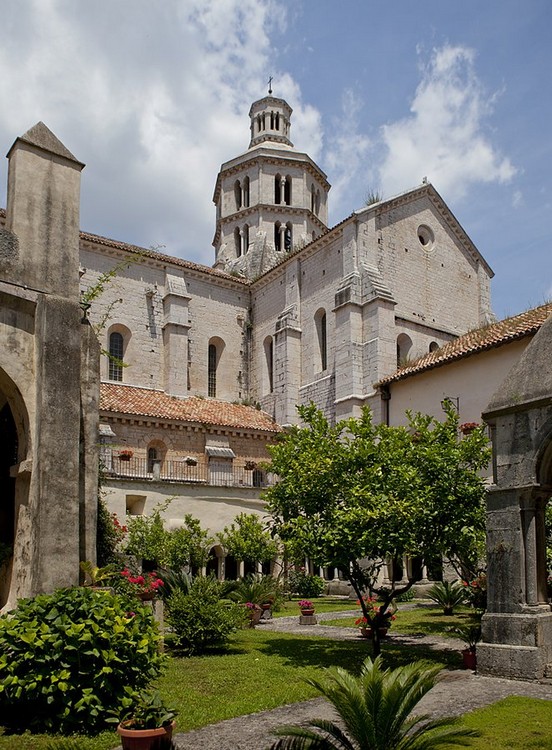
I was surprised that the Pontifical Academy of Social Sciences was the group that hosted a workshop on Saint Thomas at the Abbey of Fossanova and not the Pontifical Academy of Saint Thomas Aquinas, for instance. But, then again, the former seems to have been more consistently active over the years than the latter, but hopefully that will be changing. Checking out Thomistica.net, I found there are many other conferences organized on Thomistic thought for the saint’s jubilees, but some of these are equally surprising, such as at the University of Tulsa. But good for them! I am happy Saint Thomas’s legacy is being celebrated during the years of his Jubilees.
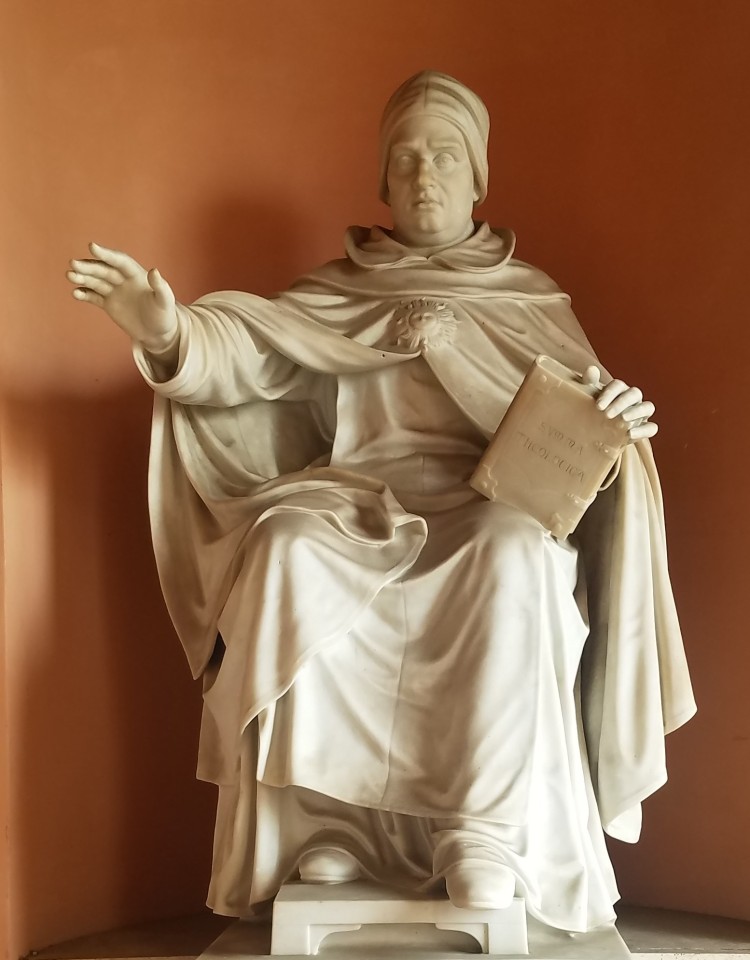
I was also struck by the fact that so many scholars engaged with Saint Thomas with regard to sociology, as such. I was reminded that it took/takes some intellectual effort for scholars trained in Catholic/scholastic traditions to discern and embrace the genuine scientific character of the social sciences such that the Pontifical University of Saint Thomas Aquinas (Angelicum) in Rome only established an Institute of Social Sciences within the Faculty of Philosophy in 1951, later raising it to a Faculty in 1974 (the 700th anniversary of the death of Saint Thomas).
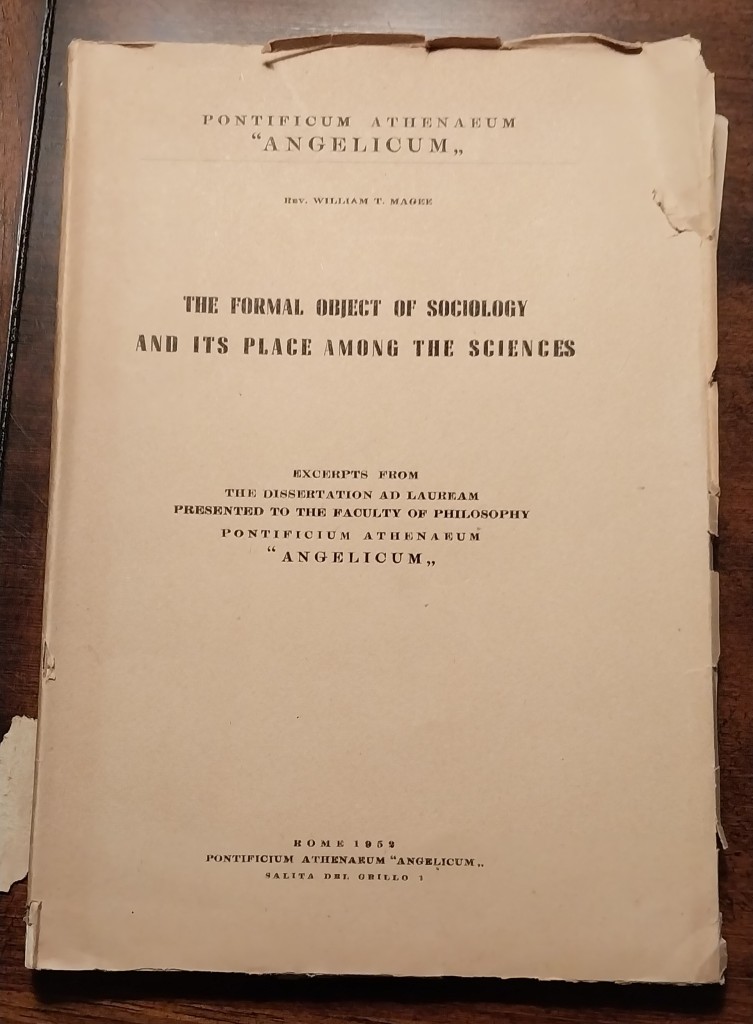
I am proud that my uncle, Msgr. William T. Magee (a priest of the Diocese of Winona, Minnesota, of which Bp. Barron, coincidentally, is now the bishop) studied at the Angelicum at this time and published his dissertation The Formal Object of Sociology and Its Place among the Sciences in 1952. I wonder if his work and interest in the then-nascent field of modern, statistical sociology contributed to the Institute of Social Sciences being established there.

 Thomistic Philosophy Page