
Are You Saved?
Many Christians believe that for Catholics the answer to this questions is a definite “No.” Some go so far as to say that Catholicism is a mere religion – empty ritual – that gets in the way of having a relationship with Jesus, and only that relationship of faith can save you. Even some Catholics aren’t sure how to answer this question, for we do not normally speak of ourselves as “saved” or “born again.” We speak of Jesus Christ as Our Savior, or as the Lord and Eternal Son of God. We more commonly profess our faith, as we do at Mass, in the words of the Nicaean Creed from 325 AD:
For us men and for our salvation he (Jesus) came down from heaven, and by the Holy Spirit was incarnate of the Virgin Mary, and became man. For our sake he was crucified under Pontius Pilate, he suffered death and was buried, and rose again on the third day in accordance with the Scriptures.
. . .
I believe in one, holy, catholic and apostolic Church. I confess one Baptism for the forgiveness of sins and I look forward to the resurrection of the dead and the life of the world to come. Amen.
Nicaean Creed
Since Catholics do not usually talk about themselves as “being saved,” some, even life-long Catholics, can come to believe that Catholics are not saved. The truth is that one’s salvation is more complicated than answering a “yes” or “no” question.

A lot of history and conflict has preceded and lies behind this question. This is one of the issues over which the Protestant reformers split from the Catholic Church. The basic difference is over what, if anything, a person has to do to be “saved”, and whether after being “saved” a person is able to do anything to lose his salvation.
As you will see below, some verses in the Bible say there is nothing we can do to earn the grace of salvation, and there are others that say we can refuse this grace, and so lose salvation. Catholics believe that both of these propositions are true. Some Protestants think that because there is nothing we can do to deserve salvation, there is nothing we can do to lose it. “Once Saved, Always Saved.” Not all Protestants, however, take this extreme position.
Jesus Christ: Savior and Redeemer
At the core of the Catholic faith is the belief that Jesus Christ died for our sins, and so redeemed the whole human race. Catholics accept completely the teaching of the Apostle Saint Paul:
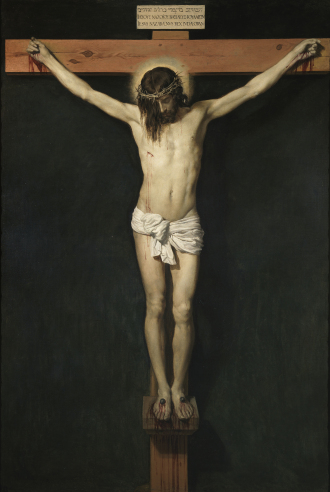
Since all have sinned and fall short of the glory of God, they are justified by his grace as a gift, through the redemption which is in Christ Jesus, whom God put forward as an expiation by his blood, to be received by faith.
Romans 3:21-26
As the Catholic Church teaches:
Justification has been merited for us by the Passion of Christ who offered Himself on the cross as a living victim, holy and pleasing to God, and whose blood has become the instrument of atonement for the sins of all men.
Catechism of the Catholic Church [CCC], no. 1992
Catholics believe that God offers every person forgiveness for their sins through the sacrifice of His Son, Jesus Christ. We further believe that no one can do anything to deserve this forgiveness. Salvation is a completely free and gratuitous gift from God.
The Necessity of Faith
Catholics, like all Christians, believe that faith in Jesus Christ is necessary for salvation. As St. Paul tells us, salvation comes to us through faith.
If you confess with your mouth that Jesus is Lord and believe in your heart that God raised him from the dead, you will be saved. For one believes with the heart and so is justified, and one confesses with the mouth and so is saved. For scripture says, “No one who believes in him will be put to shame”.
Romans 10:9-11
Again, this is what the Catholic Church clearly teaches
Believing in Jesus Christ and in the One who sent him for our salvation is necessary for obtaining that salvation. Since ‘without faith it is impossible to please [God]’ (Hebrews 11:6) and to attain to the fellowship of his sons, therefore without faith no one has ever attained justification, nor will anyone obtain eternal life ‘But he who endures to the end’ (Matthew 10:22).
CCC, 161
Moreover, we cannot do anything to deserve or earn having faith in Jesus. Faith itself is a grace, a free gift from God.
For by grace you have been saved through faith, and this is not from you; it is the gift of God; it is not from works, so no one may boast.
Ephesians 2:8
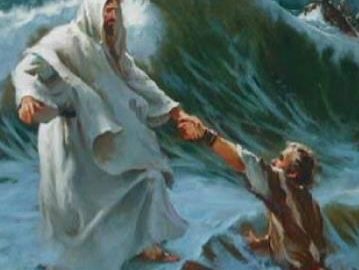
A Christian is able to believe in Jesus as an effect of this free gift of God. It is only God’s grace which allows us to the accept this gift.
Since the initiative belongs to God in the order of grace, no one can merit the initial grace of forgiveness and justification, at the beginning of conversion.
CCC, 2010

God offers the grace to believe in Him and we respond and cooperate with His action in our life. One major difference between Catholics and other Christians centers around what “salvation” actually means.
What Exactly Is Salvation?
While Catholics along with all Christians confidently proclaim that “Jesus saves,” what this means is often understood negatively: Jesus saves us from sin, death and, ultimately, hell. Implicit in this, of course, is that salvation consists in life, even eternal life. Non-Catholic understandings of the Gospel often give little positive content about what the nature of eternal life is. This is not because the Scriptures do not offer us a positive understanding of salvation and the life of the saints in Heaven (for, as we will see below, they do). Rather it is because Protestantism views salvation primarily in terms of God’s sovereign will to ‘save’ sinners who do not, and cannot, merit such mercy. The only criterion and rationale for a sinner not receiving the eternal punishment he or she deserves is the ultimately unintelligible (nay arbitrary) will of God mercifully to grant the sinner eternal life in heaven. Likewise, this way of viewing salvation also tends to view Christ’s atoning sacrifice in a very (arbitrarily) legalistic manner called “penal substitution,” which will be explained later.
Being thoroughly based on the Bible, the Catholic understanding of salvation, on the other hand, is ultimately grounded in the belief that God reveals His own inner, intrinsic nature, that we can come to have some intelligible grasp of it (though not complete by any means), and most marvelously, we can actually come to share in this nature, becoming adopted sons and daughters. This is what Catholics mean by calling some people saints; they are the Christians who have attained complete and perfect salvation in heaven. This understanding, too, is attested to in Scripture.

One way Scripture uses “saints” or “holy ones” is to refer to fellow living Christians (Romans 1:7, 1 Corinthians 14:33). This is especially true when Saint Paul refers to the ‘saints’ in Jerusalem whose financial support he asks his audience to contribute to (1 Corinthians 16:1-3). But Scripture also says that the saints in heaven are connected to us, being integral to what is attractive about the salvation found in Jesus Christ and the Church, something that is contrasted with a frightening, threatening God of wrath and vengeance.
You have not approached that which could be touched and a blazing fire and gloomy darkness and storm and a trumpet blast and a voice speaking words such that those who heard begged that no message be further addressed to them. . .. No, you have approached Mount Zion and the city of the living God, the heavenly Jerusalem, and countless angels in festal gathering, and the assembly of the firstborn enrolled in heaven, and God the judge of all, and the spirits of the just made perfect, and Jesus, the mediator of a new covenant, and the sprinkled blood that speaks more eloquently than that of Abel.
Hebrews 12:18-19, 22-24
The Book of Revelation especially talks about Christians who are already in Heaven:
After this I had a vision of a great multitude, which no one could count, from every nation, race, people, and tongue. They stood before the throne and before the Lamb, wearing white robes and holding palm branches in their hands.
These are the ones who have survived the time of great distress; they have washed their robes and made them white in the blood of the Lamb. For this reason, they stand before God’s throne and worship him day and night in his temple. The one who sits on the throne will shelter them. They will not hunger or thirst anymore, nor will the sun or any heat strike them. For the Lamb who is in the center of the throne will shepherd them and lead them to springs of life-giving water, and God will wipe away every tear from their eyes.
Revelation 7:9,14-17
This depiction includes much symbolic language: ‘white robes’ refers to a purification the saint received because of the ‘blood of the Lamb,’ Jesus’s sacrifice on the cross, and they hold ‘palm branches’ as a sign of their victory. As a result of this victory and purity, won through Jesus, they are given life and are freed from hunger, thirst, sorrow, and hardship. But the precise nature of the victory, and its relationship to purity is not spelled out.
Jesus, especially, speaks of the salvation he offers in terms of eternal life, but it depends on knowing and believing in Him.
For this is the will of my Father, that everyone who sees the Son and believes in him may have eternal life, and I shall raise him on the last day.
John 6:40
Now this is eternal life, that they should know you, the only true God, and the one whom you sent, Jesus Christ.
John 17:3
God gave us eternal life, and this life is in his Son. Whoever possesses the Son has life; whoever does not possess the Son of God does not have life.
1 John 5:11-12
Indeed, throughout the New Testament, heaven, while a place of unending life and joy, is often spoken of in terms of mystery.
At present we see indistinctly, as in a mirror, but then face to face. At present I know partially; then I shall know fully, as I am fully known.
1 Corinthians 13:12
See what love the Father has bestowed on us that we may be called the children of God. Yet so we are. The reason the world does not know us is that it did not know him. Beloved, we are God’s children now; what we shall be has not yet been revealed. We do know that when it is revealed we shall be like him, for we shall see him as he is. Everyone who has this hope based on him makes himself pure, as he is pure.
1 John 3:1-3
So, while there is a mystery in what the eternal life of heaven will be, Scripture is clear that it involves knowing God in a way He knows us. And furthermore, this knowing and being known will make us like God, and this will require moral purity. This connection between the saints in heaven extends to us here and now, and contributes, it would seem, to our own sanctification.
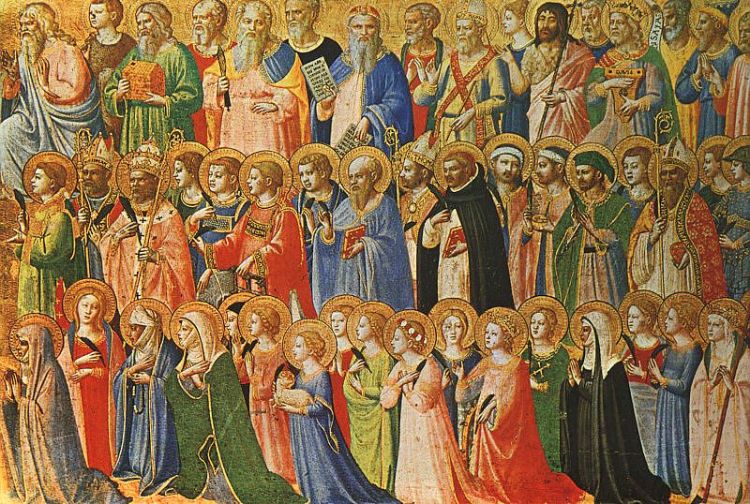
Therefore, since we are surrounded by so great a cloud of witnesses, let us rid ourselves of every burden and sin that clings to us and persevere in running the race that lies before us while keeping our eyes fixed on Jesus, the leader and perfecter of faith.
Hebrews 12:1-2
So, the life that brings us into communion with the saints, the holy ones in heaven, is at once a life in which we are purified of sin through some effort of ours, yet also one through which Jesus perfects us through having faith in Him. As the Letter to the Hebrews continues, this comes about by God purifying us “in order that we may share his holiness . . . that holiness without which no one will see the Lord.” (Hebrews 12:10, 14)
All these elements of eternal life come together if one understands the saints are the holy ones who share in the fullness of God’s life in heaven by becoming the completion of Jesus’ saving mission. For they now manifest in themselves the true, intrinsic nature that God manifested in His Son by becoming one of us in Jesus. For as the Son of God shares in our human nature in Jesus, so through Him, Christians share in His divine nature, ultimately as saints in Heaven.
God has bestowed on us the precious and very great promises, so that through them you may come to share in the divine nature, after escaping from the corruption that is in the world . . ..
2 Peter 1:4
But this divine nature is not unintelligible, and inaccessible, but rather the saints ‘see’ and ‘know as they are known’ and so share in it. And they have been brought to this glory precisely through the Son of God manifesting God’s love and redeeming humanity. As Jesus says,
Love your enemies, and pray for those who persecute you, that you may be children of your heavenly Father. . .. So be perfect just as your heavenly Father is perfect (teleios).
Matthew 5:44-45,48
For the Son of Man did not come to be served but to serve and to give his life as a ransom for many.
Mark 10:45
The cross of Jesus thus manifests and shows forth the true, intrinsic nature of God, a God Who is Love.
Beloved, let us love one another, because love is of God; everyone who loves is begotten by God and knows God. Whoever is without love does not know God, for God is love. In this way the love of God was revealed to us: God sent his only Son into the world so that we might have life through him. In this is love: not that we have loved God, but that he loved us and sent his Son as expiation for our sins. Beloved, if God so loved us, we also must love one another. No one has ever seen God. Yet, if we love one another, God remains in us, and his love is brought to perfection in us.
1 John 4:7-12
Why Jesus Died on the Cross
This brings us to a crucial question, one that puzzles many Christians and non-Christians alike, and can block their acceptance of salvation in Jesus Christ. “Why did Jesus have to die on the cross?” A common answer, though not really the Catholic answer, says that Jesus is a substitute victim, an innocent, and infinitely holy person, the Son of God, who suffers in place of them the punishment which sinners deserve, and thereby frees them from this just punishment they deserve; this is the “penal substitution” theory mentioned before. He thus allows them to receive a reward of eternal life they do not deserve. God the Father, being infinitely just, demands a sacrifice for sin, but also being infinitely merciful, sends His Son, Jesus, to offer the only sacrifice that could pay that infinite debt.
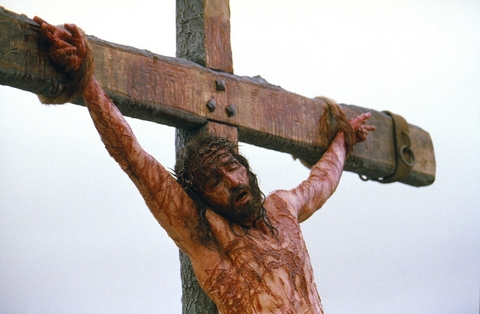
To many people skeptical of the Christian gospel, this makes no sense, and seems to show that God is cruel and arbitrary in dealing with offenses against Himself, as well as being abusive toward His Son. This seems anything but just. It is reasonably asked, could not God just forgive our offenses, as He asks us to do to those who offend us? As anyone might, in mercy, turn the other cheek, or cancel a debt owed to themselves, it seems God could simply not be offended by an offensive act, or at least forgive the offense.
And if God cannot simply cancel and forgive the injury to His infinite dignity, but satisfaction must be made for it, it is not clear how a third-party might provide the satisfaction for an offence committed by someone else. For, while one might justly pay for damage caused by another’s actions as when my father paid for a car window that I shot out with a bb gun, or a kind benefactor could pay a traffic fine or gambling debt for another, judicial, punitive sentences imposed on the person of wrongdoers due to their guilt, not the damage they cause, simply are not, in justice, transferable. A good and just God cannot just declare the responsible party not responsible, and the punishment stemming from this responsibility as having been satisfied by substituting one prisoner for another, just as nobody’s father can go to prison or be executed in the place of his son; that is just not just, even if the father is willing. To many a skeptic, it is unfathomable how it is supposed to be an act of justice for the innocent Son of God to bear the punishment of death in the place of disobedient human beings.
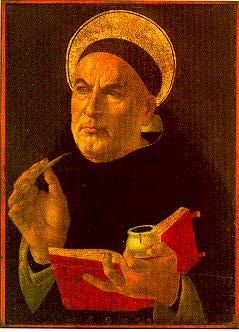
The Catholic position, as articulated by Saint Thomas Aquinas, contends that the suffering and death of Jesus on the cross was not strictly necessary. God could have forgiven and redeemed us in some other way unknown to us. But, the cross of Christ is how God did choose to do it, and there are good reasons for Him choosing to do it in this manner.
To be sure, Catholics believe that Jesus did suffer for our sins, and by His suffering, we are redeemed. But the cross of Christ does this as manifesting God’s love for us, as showing forth in a profound and supremely appropriate way the forgiveness God does wish to give freely, the forgiveness Jesus, the Son of God Himself offers from the cross. And further, Jesus’ suffering and death redeems and sanctifies humanity, for by it He realizes in His own human nature perfect love and obedience to the Father, and He becomes the means by which all who have faith in Him can share in this perfect love and obedience.
In order to see how the cross is redemptive in a way that is not a substitutionary punishment, one needs to consider what we need redemption from. In his original plan for us, God made us for love, and not in just a human way, but as He loves, to share in His life in the Trinity of Love. That is heaven: loving God in the way God loves, and loving everything else God loves in the manner that He does: in the total self-giving willing of good for others. But we, the human race, are not capable of this kind of love on our own.
Moreover, we failed at the love we are capable of. This was the first, original sin of Adam and Eve, and from it, all of us have been infected so that none of us loves humanly as we should. So, we “all have sinned and are deprived of the glory of God” (Romans 3:23). Humanity, then, was (and left to itself, is) an enemy of God. As enemies, none of us can do anything to make peace with God since the offence against God, who is infinitely good and holy, renders the offender incapable of goodness and holiness. God is willing to forgive every sin committed, but human beings (prior to being redeemed) are not capable being friends with God, of acting in obedience to Him. The only one who could make peace would be a man already at peace with God, who would do it on behalf of other humans. This Divine Mediator, the man Jesus Christ, does not just suffer what we should suffer. But His suffering is done in love, in perfect obedience to the Father, and so He does what no fallen human is capable of doing, since He is inherently good and holy (divine) yet also human (though not fallen).
Left to ourselves, there is an infinite gulf between humanity and God, and it is a kind of debt and punishment, but it is made up for, not by an innocent third-party being punished in our place, but by God Himself, as a man, acting with the loving obedience all people ought to give to God. Jesus, the Eternal Son of the Father, and God-made-man, by His perfect obedience to the Father (an obedience unto death, death on a cross (Philippians 2:8)) restores humanity to friendship with God. And being God, He rightfully inherits a place in the Kingdom of his Father (i.e. heaven). Or put in terms of love, Jesus perfectly loves the Father and atones for the lovelessness of mankind, and being God, He is able to fulfill the purpose for which God made humanity: Jesus is able to love as God loves forever in heaven.
Jesus’ obedience in accepting the cross is supremely an act of love, the most dramatic and revelatory act of the love that is God, which transforms the very sin which inflicts that cruelty and violence on Him. The Jewish leaders, the people of Jerusalem who reject Him, the Roman authorities who cynically use Him, the soldiers who beat and ridiculed Him, his disciples who deserted Him, all are manifestation of human sin: your sins, my sins. But Jesus accepted this rejection, abuse, isolation, betrayal, brutal violence and made from this our sin, His loving act. He, as it were, absorbs hate and sin with His infinite love and obedience, and thereby changes it. He makes the cross, an instrument of torture and execution, into a means of loving those who are torturing and executing him, a means of displaying for all the world and for all time how completely and profoundly God loves those whom He created. And without such terrible sin, God could not have manifested the depth of His forgiving love. He could and does forgive, but there is no forgiveness without sin to forgive, and the horror of the sin which nailed Jesus to the cross is fitting (if not strictly necessary) to manifest the sublimity of God’s love and His wish for mankind to share in a life of that love forever (which is what heaven is).
And the cross not only manifests God’s nature, but it redeems humanity and brings about our sharing in that nature. The cross reconciles sinners to God. For those who accept what Jesus does on their behalf, in faith, are incorporated into Him and participate in His saving act. His life of obedience to the Father becomes the life of obedience for everyone who, as His disciple, places their faith and trust in Him. As St. Paul says,
Yet I live, no longer I, but Christ lives in me; insofar as I now live in the flesh, I live by faith in the Son of God who has loved me and given himself up for me.
Galatians 2:20
As Jesus shares in our humanity, we share, through faith, in His divinity, and are empowered by grace to love others, even our enemies with supernatural love, and bear our crosses as his cross.
In this way, the whole of Jesus’s incarnation, but as culminated on the cross, is precisely how we come to be sharers is His divine life (2 Peter 1:4). Through the cross, through our sin and hate and selfishness and pride, God, in Jesus, loves us sinners into becoming His beloved children, brothers of the Eternal Son of God. The cross of Christ heals our estrangement from God, not by satisfying the blood requirement of a vengeful deity, but by fulfilling on our behalf the plan and purpose for which God created free creatures, capable but failing of human love. Not only does Jesus’ sacrificial love overcome our failure to love, through faith and being incorporated into Him Himself, as members of his very body, we become sanctified and by His grace, love with a super-human, divine love – the very Love between the Father and the Son which is the God’s own inner life, the life of the Holy Trinity.
Salvation and Human Freedom
Since we participate in Jesus’s redemption though faith in Him (which God’s grace enables us to have) another difference between Catholics and some other Christians concerns whether our response to God’s grace happens all at once and forever, or whether we need to continue to respond to grace with faith over a lifetime. Instead of being “saved” in one moment by just one profession of faith, Catholics understand that you have to persevere in a life of faith. A person may have a very powerful and emotional conversion at one very particular moment in time. But the salvation that comes through faith is not over and finished as soon as one accepts Jesus Christ and is baptized, because salvation, as we have seen, is a sharing in God’s nature, His very life of love. It is only in accepting Jesus, however this happens, that the life of faith has begun, a life lived in obedience to God. As Jesus Himself says,
Not everyone who says to me ‘Lord, Lord,’ shall enter the kingdom of heaven, but he who does the will of my Father who is in heaven.
Matthew 7:21
Both Catholics and most non-Catholic Christians hold that we must cooperate with God’s grace in order to have faith in Christ and receive the salvation won by Him on the cross. Even though Jesus died for everyone (1 Timothy 2:6), not everyone is thereby saved. Only those who, by cooperating with God’s grace, believe in Jesus Christ and accept His sacrifice. Catholics, however, believe that our cooperation has to last until the end of our life in order to reach final and ultimate salvation in heaven.
This is why St. Paul tells Christians to
work out your salvation with fear and trembling. For God is the one who, for his good purpose, works in you both to desire and to work.
Philippians 2:12-13
Elsewhere He says,
For through the Spirit, by faith, we await the hope of righteousness. For in Christ Jesus, [what] counts for anything [is] only faith working through love.
Galatians 5:5-6
So, if faith and a life lived in grace are not sustained and nurtured, of if they are out-right rejected, the salvation that comes through grace can be lost.
Faith is an entirely free gift that God makes to man. We can lose this priceless gift, as St. Paul indicated to St. Timothy: “Wage the good warfare, holding faith and a good conscience. By rejecting conscience, certain persons have made shipwreck of their faith (1 Timothy 1: 18-19)”.
CCC 162
Catholics believe, as Christians have from the beginning, that one can fall away from faith, and so lose the salvation they have been offered. Jesus warns about the
one who hears the word and receives it at once with joy. But he has no root and lasts only for a time. When some tribulation or persecution comes because of the word, he immediately falls away.
Matthew 13:20-21
As St. Paul warns,
See, then, the kindness and severity of God: severity toward those who fell, but kindness to you, provided you remain in his kindness, otherwise you too will be cut off.
Romans 11:22-23; see also, Matthew 26:21-46, Luke 8:13, 1 Timothy 4:1-2, Hebrews 10:26-27)
He did not even consider his own salvation completely assured and beyond any possibility of being lost (see 1 Corinthians 9:27 and 10:12).
As Catholics, we believe that if we are faithful in our service, God will be faithful to His promises to save those who, through faith, belong to His Son. We have some assurance of salvation, but this assurance is not completely guaranteed since we always remain free to reject God’s offer of grace.
Good Works Done in Faith
So, while faith in Jesus Christ is necessary for salvation, Catholics believe that it must also be lived out through good works, as Scripture attests.
So also, faith of itself, if it does not have works, is dead. . .. See how a person is justified by works and not by faith alone. . .. For just as a body without a spirit is dead, so also faith without works is dead.
James 2:17, 24, 26
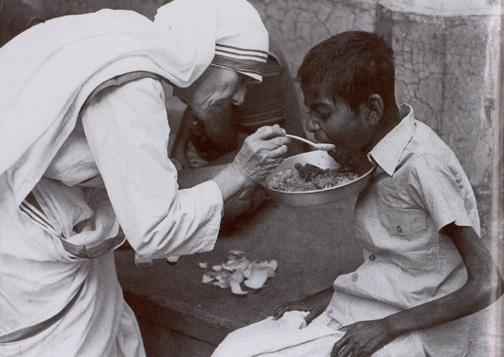
Jesus himself says salvation and eternal life depend on good works: you will “inherit the kingdom prepared for you from the foundation of the world” because “whatever you did for one of these least brothers of mine, you did for me.” (Matthew 25:31-46)
When done in faith and for the love of God, these works really are good, and so pleasing to God. These works will therefore be rewarded by God. As St. Paul says, God
will repay everyone according to his works: eternal life to those who seek glory, honor, and immortality through perseverance in good works.
Romans 2:6-7; see also Galatians 6:8-9
It is not that God merely forgives our sins by having his innocent Son suffer the punishment we deserve, declaring us thus innocent (ignoring the fact that we are depraved and corrupted by sin). Instead, God united Himself to the human race by becoming a man in Jesus Christ, and His life of obedient service, ultimately His sacrifice on the cross, restores humanity to the Father on our behalf. God gives us the grace, through faith, to unite ourselves with Christ and so share in the redemption he brought about through his cross, and by His power working in us, our sinfulness is healed and we are restored to God’s favor. That is, we are sanctified, made holy, sharing more and more fully in the divine nature of God who is Love. We become more holy as we unite ourselves more and more closely to Jesus: Christ living in us. (Galatians 2:20). Thus, this is why the Letter to the Hebrews, as we saw above, urges
Strive for peace with everyone, and for that holiness without which no one will see the Lord.
Hebrews 12:14
It is, therefore, not easy for a Catholic to answer the question, “Are you saved?” There are really three tenses of answers to this question for Catholics: I have been redeemed from my sins through the blood Jesus Christ shed on the cross. I am being saved by cooperating in faith with the grace God offers me to do His will. I will be saved and happy forever in God’s presence in heaven if I persevere in the life of grace, and die in that state.
Updated 5/13/2024
Please share your comments or questions below:
 Thomistic Philosophy Page
Who writes behind this? Thank you.
LikeLike
My name is Joe Magee. You can find information about myself on the About page.
LikeLike